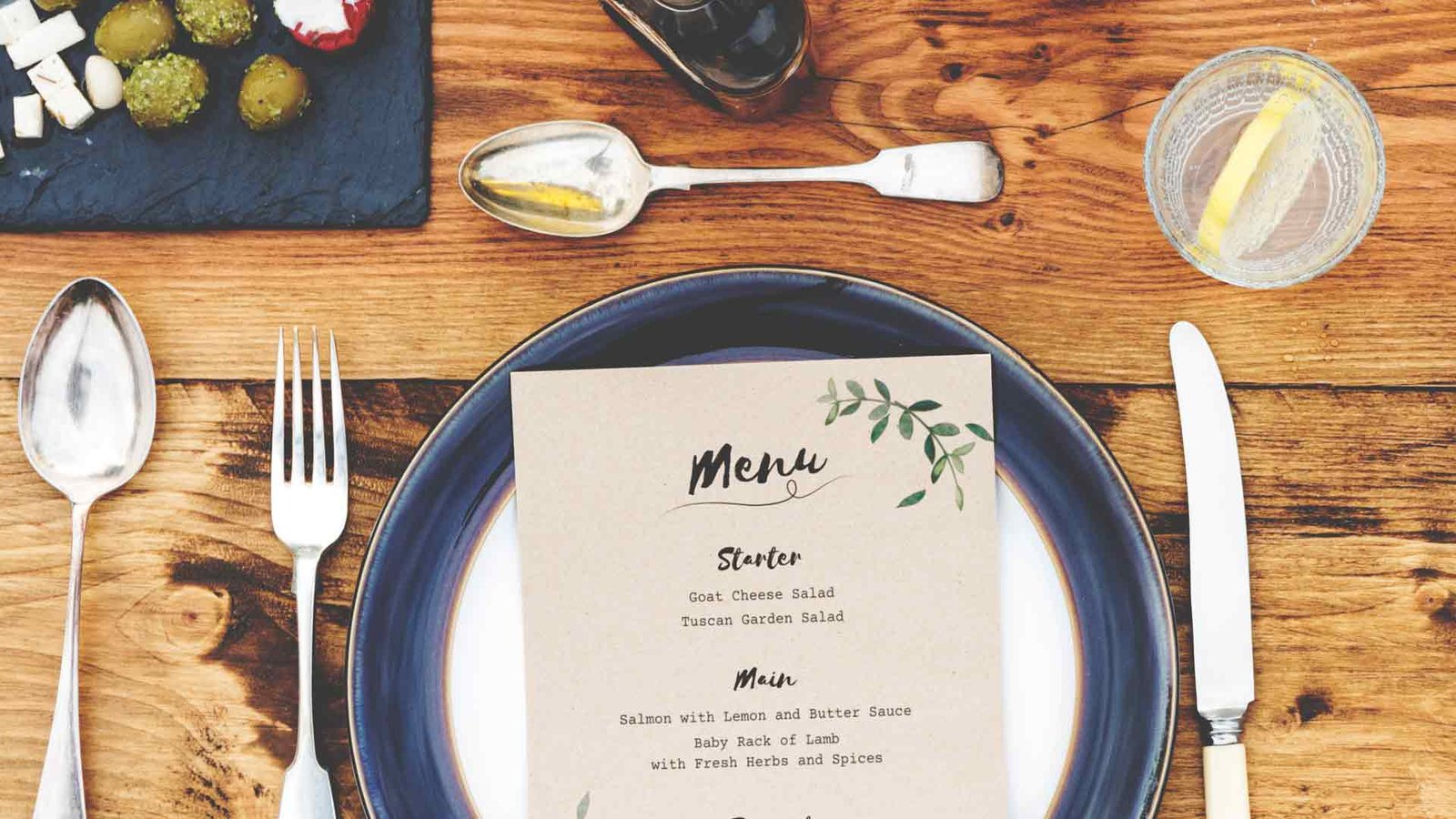


When was the last time you really looked at your restaurant’s menu, to ask yourself: Is this menu working as a silent salesperson?
Most restaurant owners pour their energy into perfecting recipes, improving service, and sourcing quality ingredients, and rightly so. But there’s one tool sitting right in front of your customers every day that has the power to dramatically boost your profits, without changing a single recipe: your menu.
At Enterprise Restaurant Consulting (ERC), we specialize in turning ordinary menus into strategic, data-backed selling tools. Through the science of menu psychology, we help restaurants subtly influence buying behavior, elevate perceived value, and increase check averages through smarter design, layout, and pricing.
In this post, we’ll break down the fascinating science behind menu psychology and show how ERC applies it to help restaurants of all sizes boost profitability and guest satisfaction.
The Psychology Behind Menu Design
Here’s the truth: customers don’t read menus, they scan them. And their eyes follow patterns that behavioral scientists and menu engineers have studied for decades. ERC leverages these insights to create menus that quietly guide guests toward high-margin, brand-aligned choices.
The Golden Triangle
When people open a menu, their eyes naturally follow a triangle:
center → top-right → top-left.
These “hot zones” are where your most profitable dishes should live. That’s where ERC positions your signature cocktails, combo meals, or high-margin entrees. These are the ones that deserve the spotlight.
Visual Anchors That Sell
Visual cues like boxes, icons, or small photos grab attention, but too many can create chaos. ERC uses anchoring with intention: subtle highlights that make high-margin dishes pop, without overwhelming guests or cheapening your brand aesthetic.
The Power of Price Positioning
Tiny tweaks in pricing can make or break perception. Our team removes dollar signs to soften “sticker shock,” aligns prices to discourage vertical scanning, and uses price anchoring. Price anchoring means positioning a premium item next to moderately priced options to make everything else feel like a deal.
Descriptive Labeling: Words That Taste Better
Language sells. A dish labeled “Grilled Chicken” sounds utilitarian. But call it “Herb-Marinated Free-Range Chicken Breast with Citrus Glaze”, and suddenly it’s an experience. ERC helps craft emotionally evocative, appetite-triggering descriptions that boost perceived value and drive higher spend per guest, without touching the recipe.
ERC’s Menu Psychology in Action
At ERC, we don’t just theorize, we implement. Our menu psychology process combines behavioral design, operational insight, and financial data to deliver measurable results.
1. Menu Layout Optimization
We begin with a forensic audit of your current menu. Are your best sellers hiding in low-visibility zones? Are guests getting decision fatigue from cluttered sections? ERC restructures your layout to create a natural flow that draws the eye to your profit-driving items.
2. Highlighting High-Margin Items
Using sales and food-cost data, ERC identifies your “stars” (those magical items that are both popular and profitable). We then use layout, typography, and strategic placement to make those dishes subtly irresistible.
3. Reducing Decision Fatigue
Too many options can paralyze diners. By logically grouping items, trimming redundant options, and adding descriptive headers, ERC helps your guests make confident, satisfying decisions faster, improving both table turnover and satisfaction.
4. Behavioral Pricing Strategy
Pricing isn’t just math; it’s instead psychology. ERC implements proven pricing techniques such as:
- Removing currency symbols for a smoother perception
- Using charm pricing (e.g., $9.95 instead of $10)
- Designing bundles and combos that feel like deals while lifting the average check size

Why Menu Psychology Matters More Than Ever
Today’s restaurant landscape is brutally competitive. Food costs are rising, margins are tightening, and diners are savvier than ever. In this climate, small psychological cues can make a big financial impact.
Here’s what industry data tells us:
- Strategic menu design can boost profits by 10–15% on average.
- Highlighting high-margin dishes can increase their sales by up to 30%.
- Streamlined menus lead to faster service times and happier guests.
For multi-unit operators and franchises, these small percentage gains scale into hundreds of thousands of dollars annually, which is why ERC integrates menu psychology into every consulting engagement.
ERC’s Full Menu Engineering Process
Menu psychology is powerful, but it’s just one part of ERC’s broader menu engineering system. It’s a process that blends behavioral science with operational and financial precision.
Our holistic approach ensures every menu is:
- Profitable: Designed to maximize margins, not just sales
- Scalable: Adaptable across locations and menu formats
- Operationally Efficient: Streamlined for kitchen flow and consistency
- Brand-Aligned: Reflective of your restaurant’s story and identity
Our Proven Process Includes:
- Sales Data Analysis – Identifying Stars, Plow Horses, Puzzles, and Dogs using menu engineering matrices
- Costing & Margin Review – Ensuring profitability aligns with concept and competition
- Menu Layout & Design – Applying psychology to guide guest behavior seamlessly
- Testing & Iteration – A/B testing layouts, tracking metrics, and refining for maximum results
- Staff Training – Empowering servers to upsell naturally and reinforce menu design strategy
Your Menu Deserves Strategy, Not Just Style
With the right design, pricing, and positioning, your menu becomes your most persuasive (and consistent) salesperson. Whether you’re a single-location operator or an expanding franchise, ERC can help you transform your menu into a powerful, data-driven revenue engine.Let’s talk. ERC offers full-service menu engineering and design consulting, from data analysis to implementation. Contact us today to schedule a consultation and discover how we can help your restaurant grow.